Arabian Alfalfa Accelerates Active Management Area Adjudication: The Future of Agribusiness in Arizona’s Groundwater Crisis
By Liam Nelson*
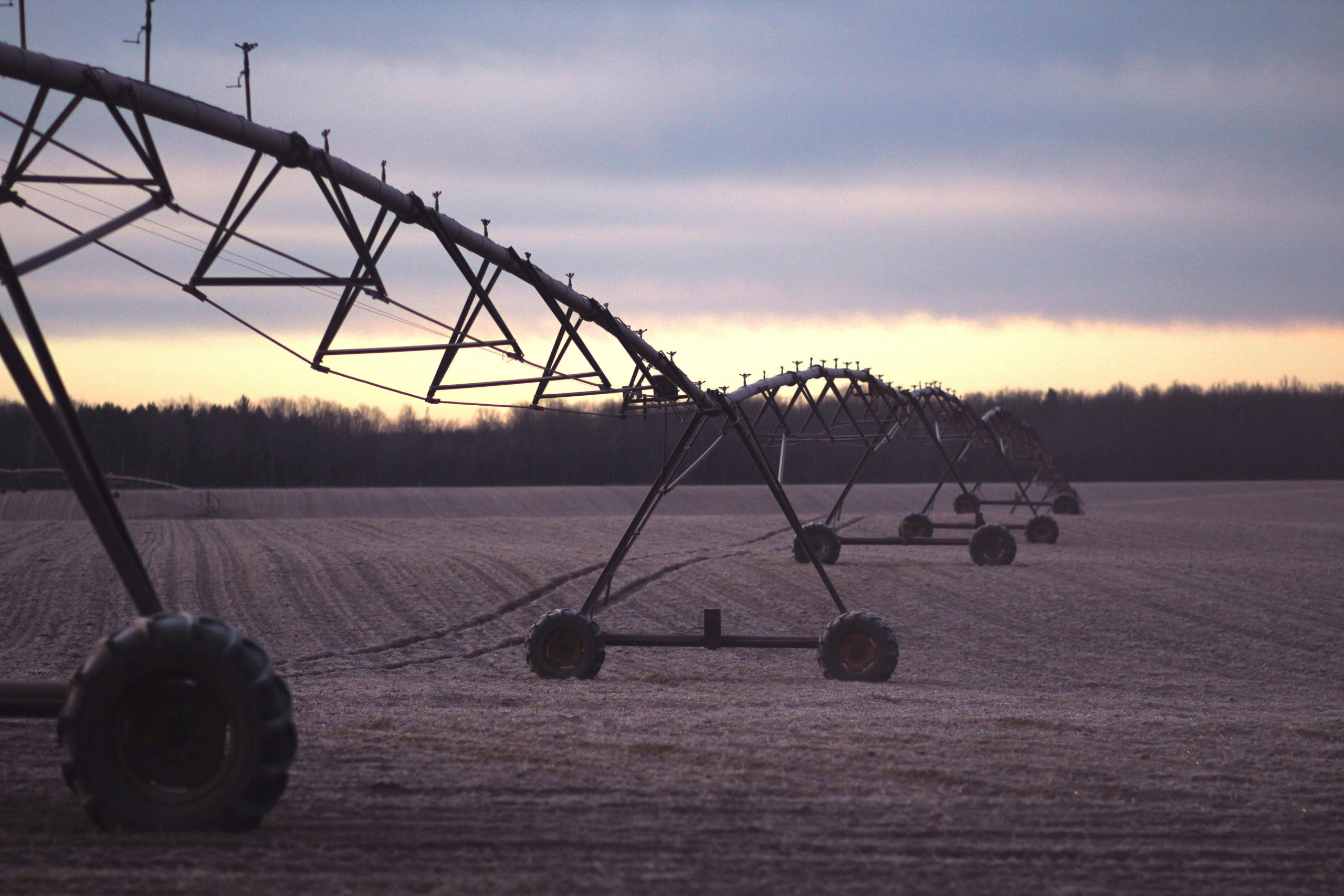
Agriculture, particularly the cattle feed crop alfalfa, has become a new boogeyman in the Colorado River Basin’s perennial water crisis. This is not without reason: agriculture comprises roughly 52% of all Colorado River water use, with alfalfa alone making up half of that.1 Public opinion further sours when the benefit of such agriculture is presumably wholly exported out of the basin or, worse yet, outside of the United States entirely.2
Arizona’s executive branch has begun to follow public opinion and pursue thirsty crop irrigators. Its first target: Saudi-owned alfalfa grower Fondomonte Arizona, LLC. Despite their leases being cancelled and water pumping having stopped, the State seems poised to make a further example of Fondomonte.3 On December 11, 2024, the Arizona Attorney General’s Office brought a nuisance lawsuit against Fondomonte after it had allegedly ceased farming operations.4 The suit concedes that, outside of an Active Management Area (AMA), groundwater pumping in Arizona is limited to what is put to a “reasonable and beneficial use,” which in the bounds of Arizona water law is effectively unlimited.5 The complaint does not allow this concession to defeat its case, instead recognizing it as “a legislative failure to address a water crisis[,]” and circumvents the supposed deficiency of law by trying to hold Fondomonte liable under a public nuisance theory.6 It cites several nuisances, all stemming from Fondomonte’s allegedly severe groundwater overdraft in the Ranegras Plain Basin, “including but not limited to: a. Decline in groundwater supply; b. Decline in groundwater elevation in wells; c. Inability to access water; d. Land subsidence; e. Sediment buildup; f. Damage to infrastructure; g. Deterioration in water quality; and h. Injury to health.”7 Perhaps as a result of this controversy (or simply as a result of the physical harm Fondomonte alone has done to the local groundwater basin), the Arizona Department of Water Resources (ADWR) began the process of designating the Ranegras as an AMA on October 15, 2025.8 The Director officially designated it as such on January 9, 2026.9
The Attorney General’s office seemingly achieved its goal of mitigating groundwater loss in the Ranegras Basin, but it signals a new trend in Arizona groundwater management. Although Arizona has eight AMAs, Ranegras Plain would be only the second created administratively by the ADWR, following the Willcox AMA in December 2024 and January 2025.10 This marks a departure from the customary means by which AMAs emerge: through legislation or through local initiative. Compared to the Willcox AMA, the Ranegras Plain appears even more unique; instead of a backdrop of a years-long local movement, the Ranegras Plain AMA designation appears to have been spurred primarily by executive action both at the ADWR and the AZ Attorney General’s Office.11
What does this mean for agribusiness in Arizona? The lawsuit has continued until the present day–Fondomonte’s heavy water use and a perceived externalizing of benefits attracted the ire of the public and, eventually, the State of Arizona, essentially leading to the collapse of its farming operation. The Arizona Attorney General’s Office and ADWR, whether collaborating or not, have worked coincidentally to respond (rather swiftly) to a single agribusiness withdrawing extreme amounts of water from the local groundwater basin.
Fondomonte’s fall was not simply caused by its intense water use, but by the product that it was growing, and where the product ended up. As the Colorado River Crisis worsens and concerns about water availability heighten, agribusinesses should remain conscious not only of their water use but of their product and its destination. The ADWR and the AZ Attorney General have, in a way, broken the seal on administrative designations of AMAs under A.R.S. § 45-414, and have proven willing to wield the law as a tool to expeditiously rein in those agribusiness ventures they view as threatening or damaging to Arizonans. In this case, the State of Arizona has demonstrated a willingness to step beyond the bounds of “water law” and use new and combined strategies to manage groundwater. The water future for many agribusinesses in Arizona is no longer just a question of law and hydrology, but of public opinion, too.
Arizona courts have not yet ruled whether Fondomonte’s heavy groundwater pumping, while strictly a “reasonable and beneficial use,” constitute a nuisance to its neighbors such that it would be foreclosed even without an AMA designation. With this uncertainty, agribusinesses outside of AMAs have two paths forward:
- Minimize water use and take measures to keep their operations out of public and state scrutiny; OR
- Pump as much groundwater as possible (for a reasonable and beneficial use) to qualify under grandfathering provisions when an AMA designation eventually appears.
Of course, as a lifelong Arizona resident hoping to remain such, I recommend the former. However, in the short term, the latter may be more economically beneficial to agribusiness interests. Nevertheless, a “tragedy of the commons” led to this water crisis; another such tragedy, fueled by a mad dash to appropriate as much groundwater as possible, may put the final nail in the coffin. As the water crisis worsens, the State may decide to triage certain water uses, as it has done here: even in the latter approach, agribusinesses risk that coffin being their own sooner than that of the Colorado River Basin or Arizona groundwater as a whole.
* J.D. Candidate, Class of 2028, Sandra Day O’Connor College of Law at Arizona State University
- Brian Richtor, Gambhir Lamsal, Landon Marston, Sameer Dakhal, Laljeet Singh Sangha, Richard R. Rushforth, Dongyang Wei, Benjamin L. Ruddell, Kyle Frankel Davis, Astrid Hernandez-Cruz, Samuel Sandoval-Solis & John C. Schmidt, New Water Accounting Reveals Why the Colorado River No Longer Reaches the Sea, 5 Commun. Earth & Env’t, no. 1, art. 134 (2024), https://doi.org/10.1038/s43247-024-01291-0. ↩︎
- See generally Suman Naishadham, In Arizona, Fresh Scrutiny of Saudi-Owned Farm’s Water Use, Assoc. Press (Apr. 28, 2023), https://apnews.com/article/water-foreign-farms-arizona-drought-saudi-arabia-2fe3ea1fad43b14ca118cf85196f3e9a; The New Republic (u/thenewrepublic), Why Is Arizona Using Precious Water to Grow Alfalfa for Saudi Arabia?, Reddit (Mar. 29, 2023), https://www.reddit.com/r/climate/comments/125wlgh/why_is_arizona_using_precious_water_to_grow/. ↩︎
- Suman Naishadham, Arizona To Cancel Leases Allowing Saudi-Owned Farm Access to State’s Groundwater, Assoc. Press (Oct. 3, 2023), https://apnews.com/article/saudi-arabia-drought-arizona-alfalfa-water-agriculture-0d13957edaf882690e15c0bd9ccfa59f; Ellie Nilsen,Foreign-Owned Farm No Longer Pumping Groundwater on State Land to Feed Cattle Overseas, Arizona Governor Says, CNN (Mar. 7, 2024), https://www.cnn.com/2024/03/07/us/foreign-farm-fondomonte-groundwater-arizona. ↩︎
- Complaint, State of Arizona v. Fondomonte Arizona, LLC, 2024 WL 5082877 (Ariz Super. Ct. 2024); Naishadhamsupra note 3. ↩︎
- See Ariz. Rev. Stat. § 45-453. ↩︎
- Complaint 10, State of Arizona v. Fondomonte Arizona, LLC, 2024 WL 5082877 (Ariz Sup. Ct. 2024); Ariz. Rev. Stat. § 13-2917. ↩︎
- Complaint 26, 51. ↩︎
- Ariz. Dept. of Water Res., Designation Process of the Ranegras Plain Groundwater Basin AMA (last visited Oct. 30, 2026), https://www.azwater.gov/designation-process-ranegras-plain-groundwater-basin-ama. ↩︎
- Ariz. Dept. of Water Res., In Re Subsequent Active Management Area: Ranegras Plain Groundwater Basin, La Paz and Yuma Counties, Findings, Decision and Order (Jan. 9, 2026). ↩︎
- See Ariz. Rev. Stat. § 45-414; Ariz. Dept. of Water Res., In Re Subsequent Active Management Area, Willcox Groundwater Basin, Graham and Cochise Counties, Findings, Decision and Order (Dec. 19, 2024); Ariz. Dept. of Water Res., In Re Subsequent Active Management Area: Ranegras Plain Groundwater Basin, La Paz and Yuma Counties, Findings, Decision and Order (Jan. 9, 2026). ↩︎
- Compare Deborah, Saudi Farm Faces Regulation with New Groundwater Management Area, Western-Water (Jan. 14, 2026), https://www.western-water.com/2026/01/14/saudi-farm-faces-regulation-with-new-groundwater-management-area/, with Christopher Kuzdas, From Water Bankruptcy to Hope: How a Grassroots Movement in Arizona Made History, Env’t Def. Fund (June 26, 2026), https://blogs.edf.org/waterfront/2026/06/26/water-bankruptcy-to-hope-grassroots-movement-arizona-part2/. ↩︎
Related Posts

A Hollywood Ending? What the Paramount-Warner Bros. Antitrust Settlement Means for Competition

Synthetic Performers, Real Consequences: How AI Disclosure Laws are Reshaping Digital Advertising