“Rotten to Its Core?” What the Apple v. OpenAI Lawsuit Signals for the Future of Trade Secrets, Data Protection, and Human Capital
By Tara Buie*
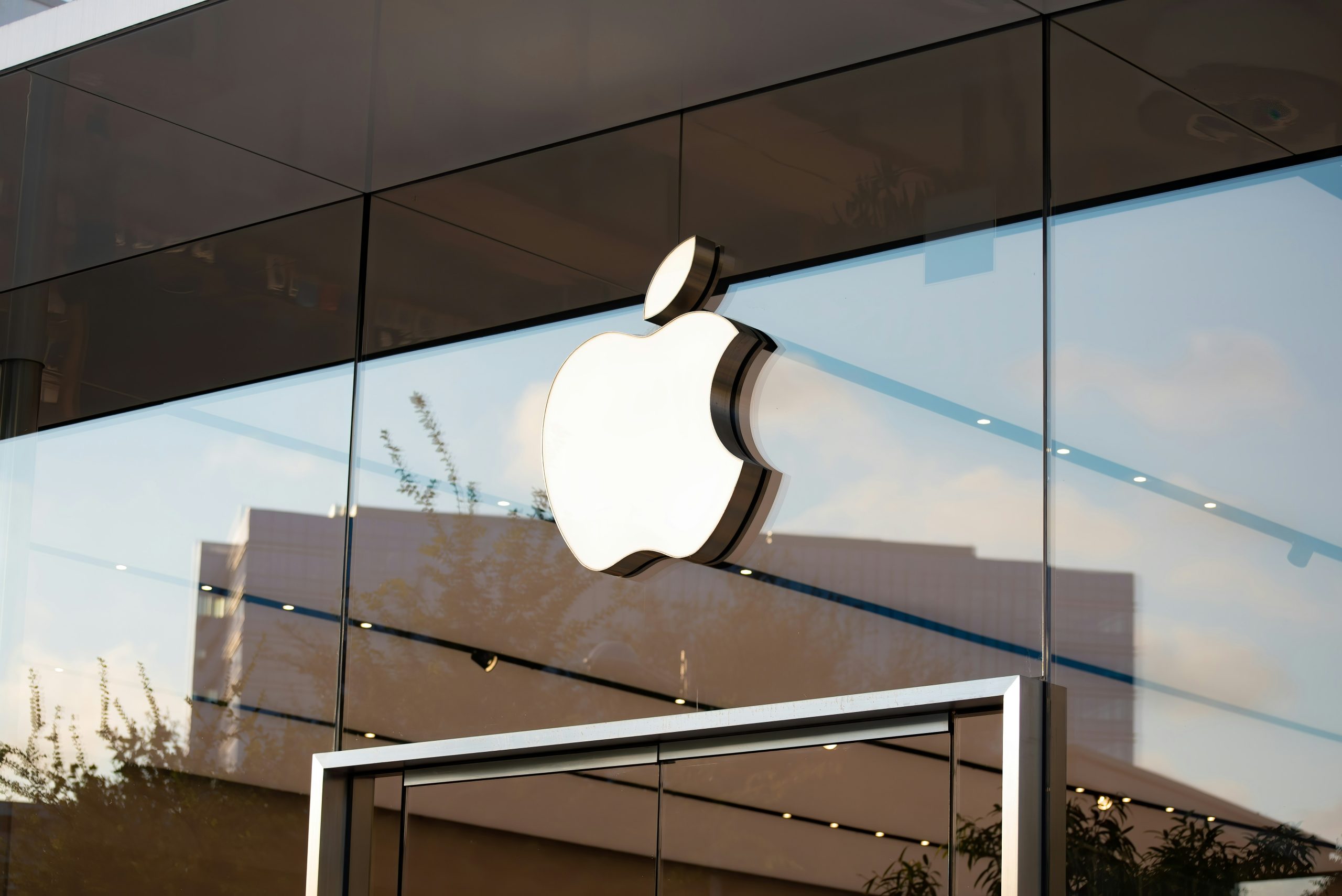
The weather wasn’t the only thing heating up this summer. A new battle was brewing between two tech giants, Apple and OpenAI. In July 2026, Apple filed a lawsuit against OpenAI, io Products, and two former Apple employees.1 Apple alleges that its former employees “stole” its trade secrets for OpenAI’s benefit.2 Specifically, Apple asserts that Tang Tan, Apple’s former Vice President of Product Design for iPhones and Apple Watches, and Chang Liu, a former engineer at Apple, improperly used Apple information after leaving the company.3 Apple further alleges that more than 400 of its employees have left to work for OpenAI and that those former employees possess knowledge of Apple’s confidential and proprietary information that OpenAI is exploiting.4 Taken together, these allegations form the basis of Apple’s Complaint, where Apple strikingly refers to OpenAI’s alleged misconduct as “rotten to its core.”5
OpenAI’s response was not confined to the courtroom. The company addressed the allegations in a public post and a legal filing. In the post, OpenAI denies any misconduct, accuses Apple of failing to properly manage system access when employees leave, and assures the public that it does not have or want any of Apple’s trade secrets.6 OpenAI reinforced its position by uploading screenshots of email messages between Chang Liu and Apple employees,7 and formalized its position in a motion to dismiss, notably stating that Apple’s Complaint itself was “rotten to its core.”8
The Shift: Business Partners to Potential Competitors
This dispute marks a sharp reversal from the companies’ earlier relationship. In 2024, Apple struck a deal with OpenAI to bring a personalized version of artificial intelligence to its 2.2 billion device users.9 The two entered a high-profile partnership in which Apple integrated ChatGPT into the iPhone, iPad, and Mac operating systems.10 At the time, Sam Altman, OpenAI’s CEO, welcomed the partnership with considerable enthusiasm, saying the company was “excited to partner with Apple to bring ChatGPT to their users in a new way.”11
That optimism proved to be short-lived. Based on the allegations in the Complaint, the turning point might have been OpenAI’s entry into a new business sector.12 In May 2025, OpenAI announced its $6.5 billion acquisition of io Products, Inc., signaling its expansion into the hardware market.13 That acquisition14 likely shifted OpenAI from business partner to business competitor, with Apple asserting that OpenAI resorted to “unlawful shortcuts”15 and “turned to trade secret misappropriation to free-ride off Apple’s decades of innovation.”16
The Signal: Generative AI, Employee Mobility and the Rise in Trade Secret Litigation
On its face, this lawsuit appears to be a standard intellectual property dispute arising from an evolving business relationship, but the current uptick in trade-secret cases might signal something bigger. In 2025, more than 1,500 federal trade-secret cases were filed, reaching their highest level in the past decade.17 The increase reflects a “sustained upward trajectory driven by rapid technological change, including the rise of AI tools and increased employee mobility.”18 Trade secrets have become a critical battleground because they can be created swiftly and lost suddenly. 19 Drawing on industry data, Certum Group reports that “the single largest source of trade secret disputes is not corporate espionage, [but] it is ordinary talent mobility, [with approximately] 60% of misappropriation cases involving a departing employee [who is] typically heading to a direct competitor.”20 Certum Group further argues that AI has heightened the importance of trade secret protection because “when the crown jewels are unpatented know-how, misappropriation is not a nuisance; it is an existential competitive event.”21
The Balance: Employee Mobility, Human Capital and Trade Secret Volatility
Why does it matter that 60% of these cases involve departing employees? It matters because employees are individuals free to take their knowledge, skills, and experience with them,22 but they may also possess knowledge of or have access to an employer’s confidential information. This dynamic, coupled with a large exodus of employees, can make human capital both an invaluable asset and a potential liability when employees leave.23 Human capital is the “knowledge, skills, competencies and other attributes embodied in individuals that are relevant to economic activity.”24
Here, Apple alleges that its former employees improperly “stole” its trade secrets and shared them with their new employer, OpenAI.25 The departure of those employees highlights a broader problem for employers competing for both talent and competitive advantage. While an employee may use general knowledge, skill, and experience acquired in their former employment, they cannot use protected confidential information to compete with a former employer.26 The difficult question is where to draw the line between employee rights and employer interests.
The Standard: What is a Trade Secret?
To understand how this case could play out, it helps to know what qualifies as a trade secret. Not every piece of data is proprietary. Under federal law, a trade secret is information that (1) the owner has taken reasonable measures to keep secret, and (2) derives independent economic value, actual or potential, from not being generally known to, and not being readily ascertainable through proper means by, another person who can obtain economic value from the disclosure or use of the information.27 To prevail in this federal lawsuit, Apple must establish both the existence of a protectable “trade secret” and its “misappropriation.”28 To establish that the information qualifies as a trade secret, Apple must show that it took “reasonable measures” to maintain its secrecy and that the information “derives independent economic value from not being generally known or readily ascertainable.”29
The Implications: Where Do We Go From Here?
It is difficult to determine a company’s motivation for bringing a trade secret misappropriation claim. It could be driven by many factors, including protecting data security and maintaining a competitive edge, but some critics argue that “overbroad” confidentiality agreements or strict trade secret laws may limit employee movement or stifle competition.30 Apple’s motivation for filing this action is unclear, but California’s broad prohibition on non-competes31 has made trade secret law an important legal avenue for protecting proprietary information when an employee departs to a competitor.
Although this case is still in its early stages, it is worth watching. As companies compete fiercely for human capital and innovative technology, Apple v. OpenAI may reshape how far companies can go to protect competitive advantages.
* J.D. Candidate, Class of 2028, Sandra Day O’Connor College of Law at Arizona State University
- Complaint, Apple Inc. v. Liu, No. 5:26-cv-07078 (N.D. Cal. July 10, 2026). ↩︎
- Id. ¶ 1. ↩︎
- Ivan Moreno, Apple Alleges OpenAI, Ex-Employees Took Trade Secrets, Law360 (July 10, 2026, 4:43 PM EDT), https://www.law360.com/articles/2499735/apple-alleges-openai-ex-employees-took-trade-secrets. ↩︎
- Complaint, supra note 1, ¶ 53. ↩︎
- Complaint, supra note 1, ¶ 13. ↩︎
- Apple Is Getting This Wrong, OpenAI (Aug. 3, 2026), https://openai.com/index/apple-is-getting-this-wrong/. ↩︎
- Id. ↩︎
- Defendants OpenAI Foundation and OpenAI Group PBC’s Motion to Dismiss, Apple Inc. v. Liu, No. 5:26-cv-07078 (N.D. Cal. Aug. 6, 2026). ↩︎
- Aaron Tilley, Apple Introduces ‘Apple Intelligence,’ New OpenAI Partnership as AI Takes Center Stage, The Wall Street Journal (June 10, 2024, 6:23 PM ET), https://www.wsj.com/tech/ai/apple-wwdc-2024-ai-release-356c5303. ↩︎
- Introducing Apple Intelligence, the personal intelligence system that puts powerful generative models at the core of iPhone, iPad, and Mac, Apple (June 10, 2024), https://www.apple.com/newsroom/2024/06/introducing-apple-intelligence-for-iphone-ipad-and-mac/. ↩︎
- OpenAI and Apple Announce Partnership to Integrate ChatGPT into Apple Experiences, OpenAI (June 10, 2024), https://openai.com/index/openai-and-apple-announce-partnership/. ↩︎
- Complaint, supra note 1, ¶¶ 35–38. ↩︎
- A Letter from Sam & Jony, OpenAI (May 21, 2025), https://openai.com/sam-and-jony/. ↩︎
- Cooley Advises io Products on $6.5 Billion Acquisition by OpenAI, Cooley LLP (May 21, 2025), https://www.cooley.com/news/coverage/2025/2025-05-29-cooley-advises-io-products-on-6-5-billion-acquisition-by-openai. ↩︎
- Complaint, supra note 1, ¶ 38. ↩︎
- Id. ¶ 41. ↩︎
- Lex Machina 2026 Trade Secret Litigation Report: Federal Trade Secret Filings Hit an All-Time High in 2025, LexisNexis (Jan. 29, 2026), https://www.lexisnexis.com/community/pressroom/b/news/posts/lex-machina-2026-trade-secret-litigation-report-federal-trade-secret-filings-hit-an-all-time-high-in-2025. ↩︎
- Daniel F. Gelwicks, Trade Secret Litigation Shows No Signs of Slowing, Step Into IP Blog, Steptoe (Feb. 13, 2026), https://www.steptoe.com/en/news-publications/step-into-ip-blog/trade-secret-litigation-shows-no-signs-of-slowing.html. ↩︎
- Id. ↩︎
- Patrick Dempsey, Trade Secret Filings Just Hit a Record. Here’s Why, Certum Grp. (Sept. 1, 2026), https://www.certumgroup.com/trade-secret-filings-just-hit-a-record-here-s-why. ↩︎
- Id. ↩︎
- Kurt M. Saunders & Nina Golden, Skill or Secret? – The Line Between Trade Secrets and Employee General Skills and Knowledge, 15 N.Y.U. J.L. & Bus. 61 (2018). ↩︎
- Alexander Serenko, A. Mohammed Abubakar & Nick Bontis, Understanding the Drivers of Organizational Business Performance from the Human Capital Perspective, 31 Knowledge & Process Mgmt. 48, 51 (2024). ↩︎
- OECD, Survey of Adult Skills – Reader’s Companion: 2023, OECD Skills Studies, OECD Publishing, Paris, https://www.oecd.org/en/publications/survey-of-adult-skills-2023_3639d1e2-en/full-report/the-survey-of-adult-skills-and-the-measurement-of-human-capital_f320884e.html#chapter-d1e182-89eb84129d. ↩︎
- Complaint, supra note 1, ¶ 61. ↩︎
- Morlife, Inc. v. Perry, 56 Cal. App. 4th 1514, 1519 (1997). ↩︎
- 18 U.S.C. § 1839(3)(A)–(B). ↩︎
- InteliClear, LLC v. ETC Glob. Holdings, Inc., 978 F.3d 653, 657–58 (9th Cir. 2020). ↩︎
- 18 U.S.C. § 1839(3)(A)–(B); InteliClear, LLC, 978 F.3d at 660. ↩︎
- Camilla A. Hrdy & Christopher B. Seaman, Beyond Trade Secrecy: Confidentiality Agreements that Act Like Noncompetes, 133 Yale L.J. 669 (2024); see also Charles Tait Graves & James A. DiBoise, Do Strict Trade Secret and Non-Competition Laws Obstruct Innovations?, 1 Entrepr. Bus. L.J. (2006), https://kb.osu.edu/server/api/core/bitstreams/2a876b69-3ae8-54d8-817e-badce7b763d1/content. ↩︎
- Cal. Bus. & Prof. Code § 16600 (West). ↩︎
Related Posts

Synthetic Performers, Real Consequences: How AI Disclosure Laws are Reshaping Digital Advertising

New York City’s DoorDash Settlement: The Risks of Automated Gig-Worker Pay